


There’s a cheesecake that breaks every rule of classical baking and comes out more beautiful for it. Blast it in a screaming-hot oven, let it go gloriously dark on top, pull it out while the center is still wobbly — and somehow, the result is the silkiest, most luxurious thing you’ll ever put on a plate.
That’s the Burnt Basque Cheesecake. Born in 1990 at La Viña, a pintxos bar in San Sebastián’s old quarter, conceived by Santiago Rivera as a humble daily dessert — and now one of the most replicated baked goods on earth, from Tokyo to New York, without ever losing its rustic, undecorated soul.
The problem? Most online recipes miss what makes it work. The results are either rubbery, terribly sunken, or — worst of all — just cheesecake with a tan.
This masterclass covers the full picture: the custard science, the bake, and the chill.
📺 Watch my video for the step-by-step recipe or keep reading!
“The word ‘burnt’ is a misnomer. What we’re after is caramelized — deep, dark, complex, slightly bitter at the very surface.”
Why this works
A Basque cheesecake is, technically, a custard — and every decision in the recipe flows from that.
No stand mixer, because aeration is the enemy of density.
No crust, because the parchment-lined pan does the structural work.
No water bath, because the aggressive heat is exactly the point.
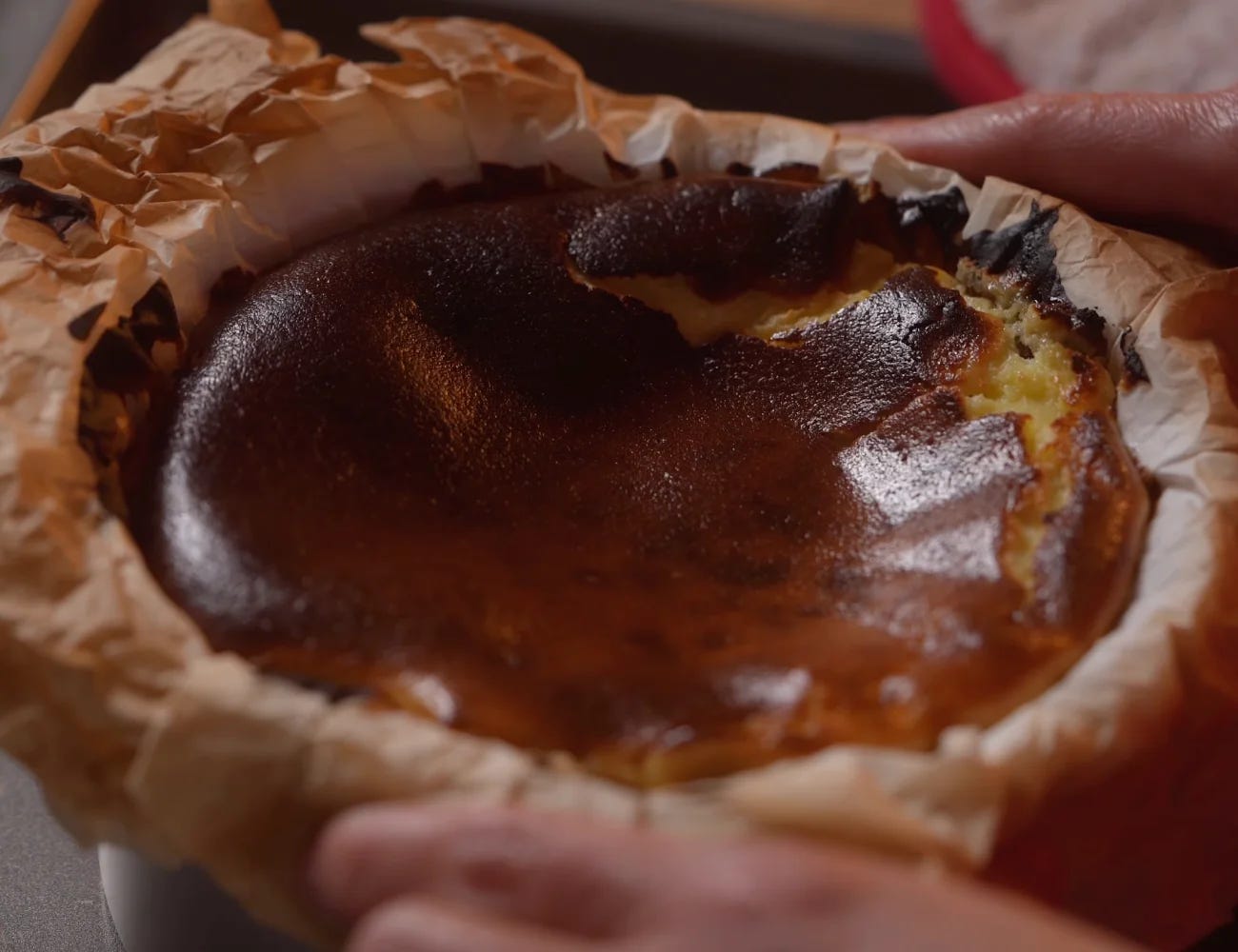
The dark top isn’t damage — it’s caramelization, the same Maillard chemistry that makes the crust of good bread, the skin of a roast chicken, the surface of a crème brûlée worth cracking. What you want is deep amber. What you want to avoid is acrid and genuinely charred. The difference is a few minutes and your nose.
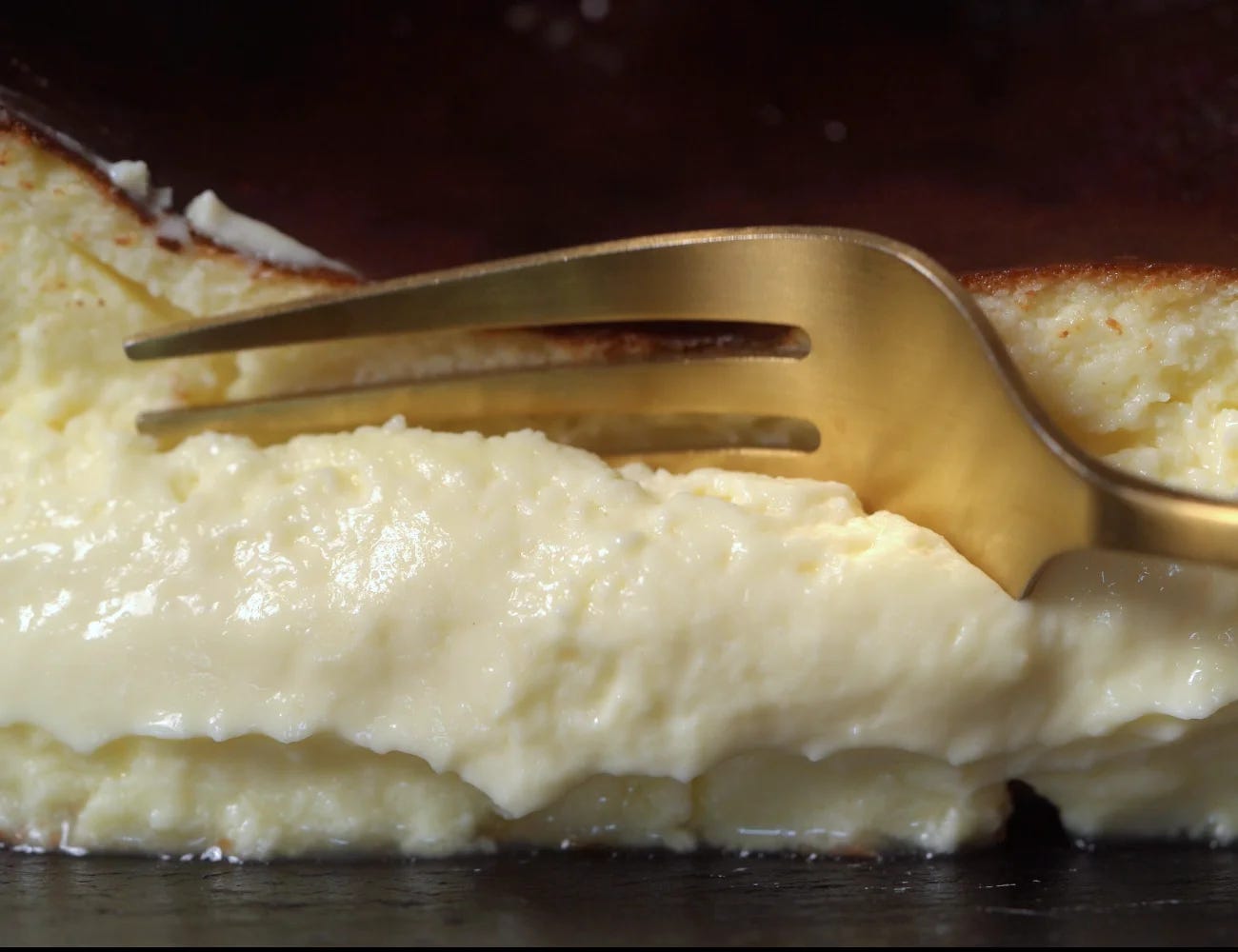
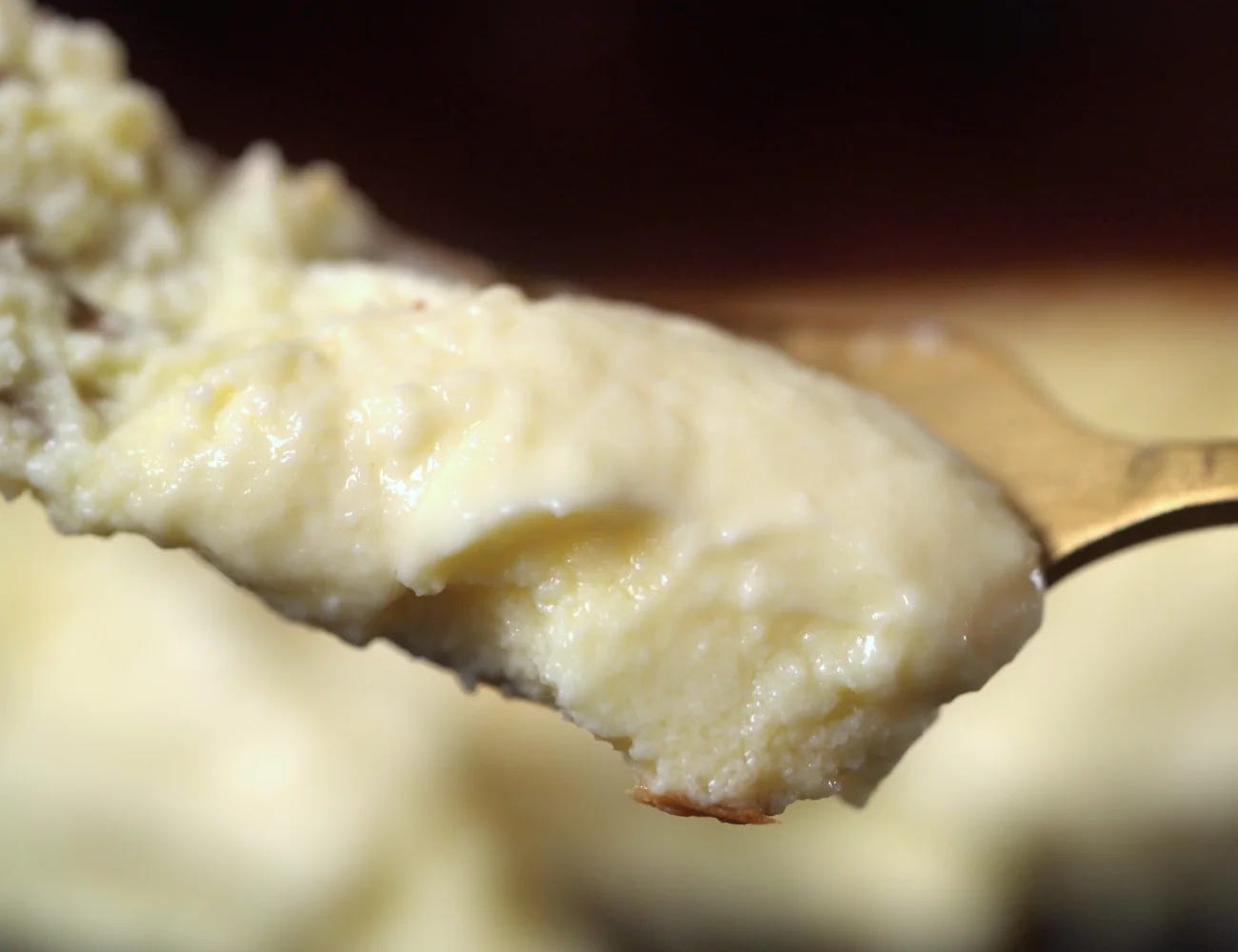
The wobbly center is not a mistake. When it comes out of the oven at 71°C (160°F) internal, the custard is still in a pre-set state — and that wobble is precisely what sets, over four hours of chilling, into that pale, almost molten interior that makes a perfect slice look like a lava cake cross-section.
✨ Ingredients ✨
For one 15 × 7.5 cm (6” × 3”) pan
eggs: 171 g (3-4 eggs)
cream cheese: 518 g / 18¼ oz
granulated sugar: 162 g / ¾ cup + 1 tbsp
fine salt: 2 g / ⅓ tsp
flour (all purpose): 25 g / 3 tbsp
heavy cream: 306 g / 1¼ cups
vanilla extract: 6 g / 1¼ tsp
orange extract: few drops
Weigh everything. Basque cheesecake is ratio-sensitive in a way that most baking is not — the flour quantity in particular walks a narrow line between structure and density. A digital scale is the most useful thing in your kitchen for this recipe.
✨ Step-by-Step Recipe ✨
The Custard
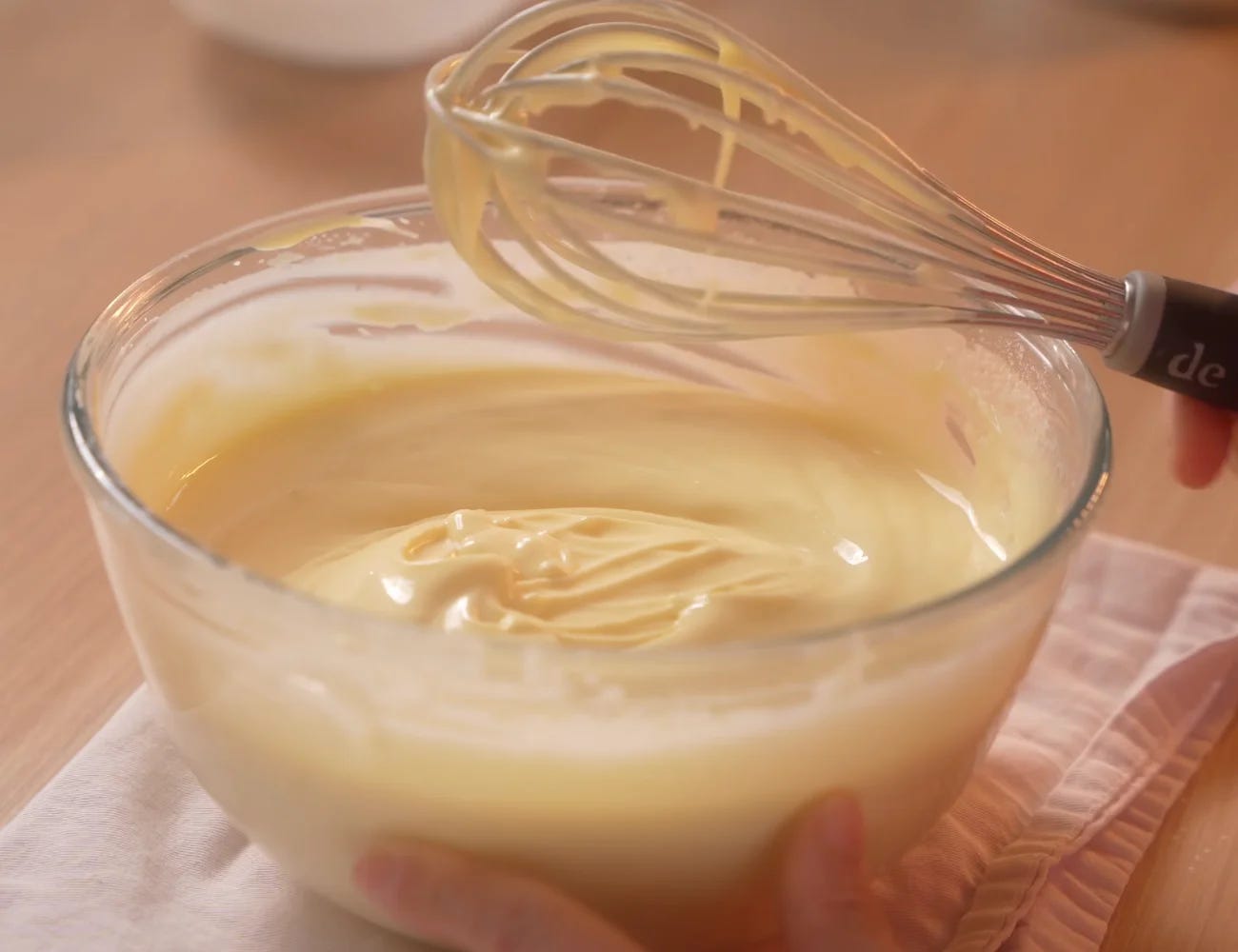
Mix by hand throughout. Start with the eggs, add the cream cheese in cubes (fully room-temperature — if you forgot, 20 minutes cut into small pieces on the counter), then sugar, salt, and sifted flour.
Vanilla and orange extract go in next: the orange is not a flavor note, it’s a brightness that makes people ask what’s in there.
Pour in the heavy cream slowly as you stir to bring it together.
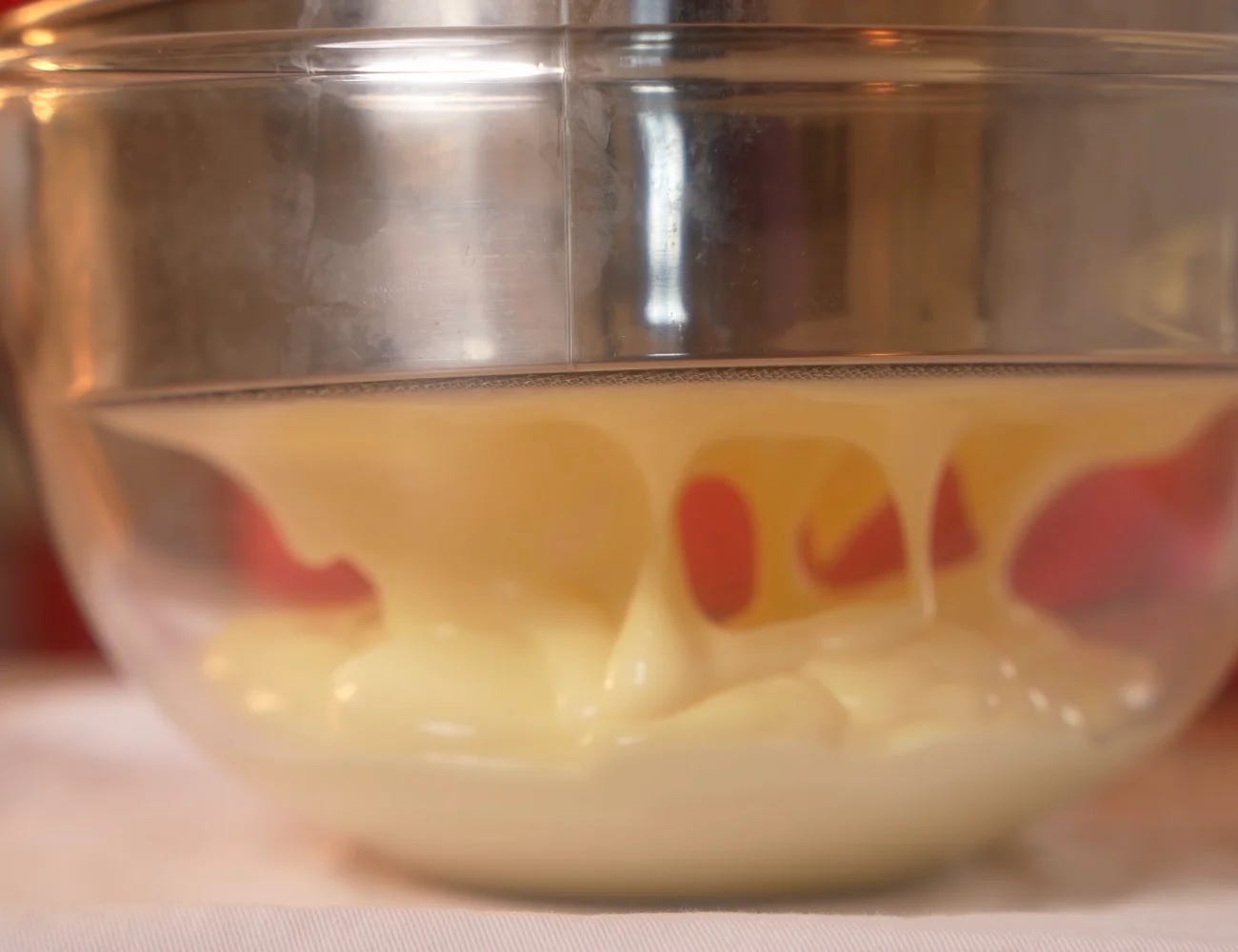
Strain it. One pass through a fine mesh sieve catches any cream cheese lumps or unincorporated flour. This one extra minute separates a good cheesecake from a perfect one.
Pan Prep
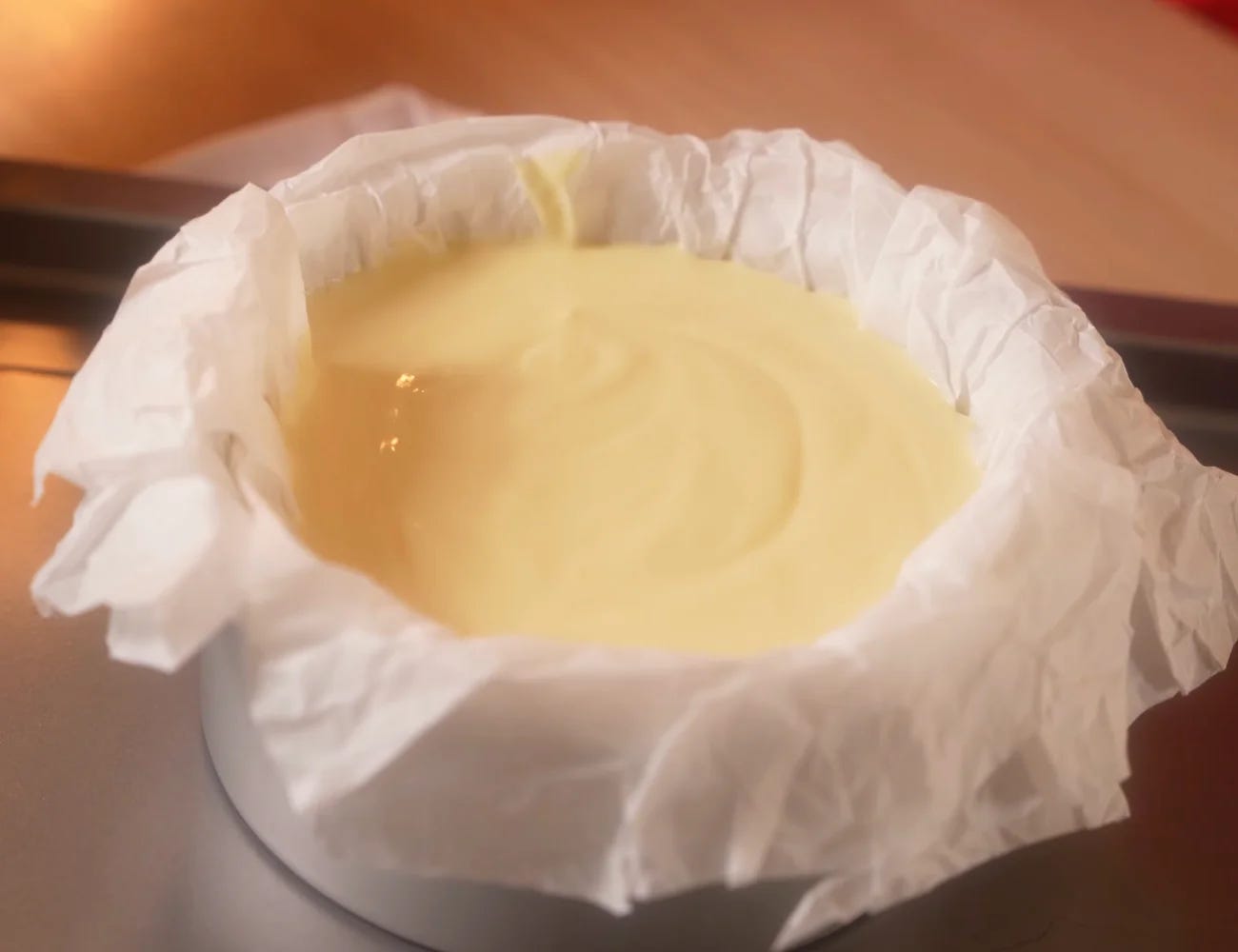
Line your pan with two overlapping sheets of parchment — let them crinkle naturally up the sides.
The double layer protects the base from the intense heat below, and the wrinkled edges give the finished cheesecake its characteristic rustic silhouette.
The Bake
Place the pan on a cookie sheet before it goes in — the sheet insulates the base from direct oven-rack contact and keeps the bottom from overcooking while the top caramelizes.
Bake 15 minutes in a preheated 220°C (428°F), static heat, center rack.
Check the top: deeply golden and caramelized means it’s done. If you want it darker, switch to broil for up to 3 minutes — watch it the entire time.
Internal temperature at the center should read 71°C (160°F). The center will still look extremely wobbly. That’s correct.
If the sides are browning before the top is caramelized, your oven runs hot — note it and drop 10°C next time.
The Chill
Cool completely at room temperature first — it will deflate as it cools, which is normal and has no effect on the final texture.
Then refrigerate for a minimum of four hours; overnight is categorically better. You are waiting for the custard to fully set, the flavors to deepen, and the center to reach the dense creaminess that makes Basque cheesecake what it is.
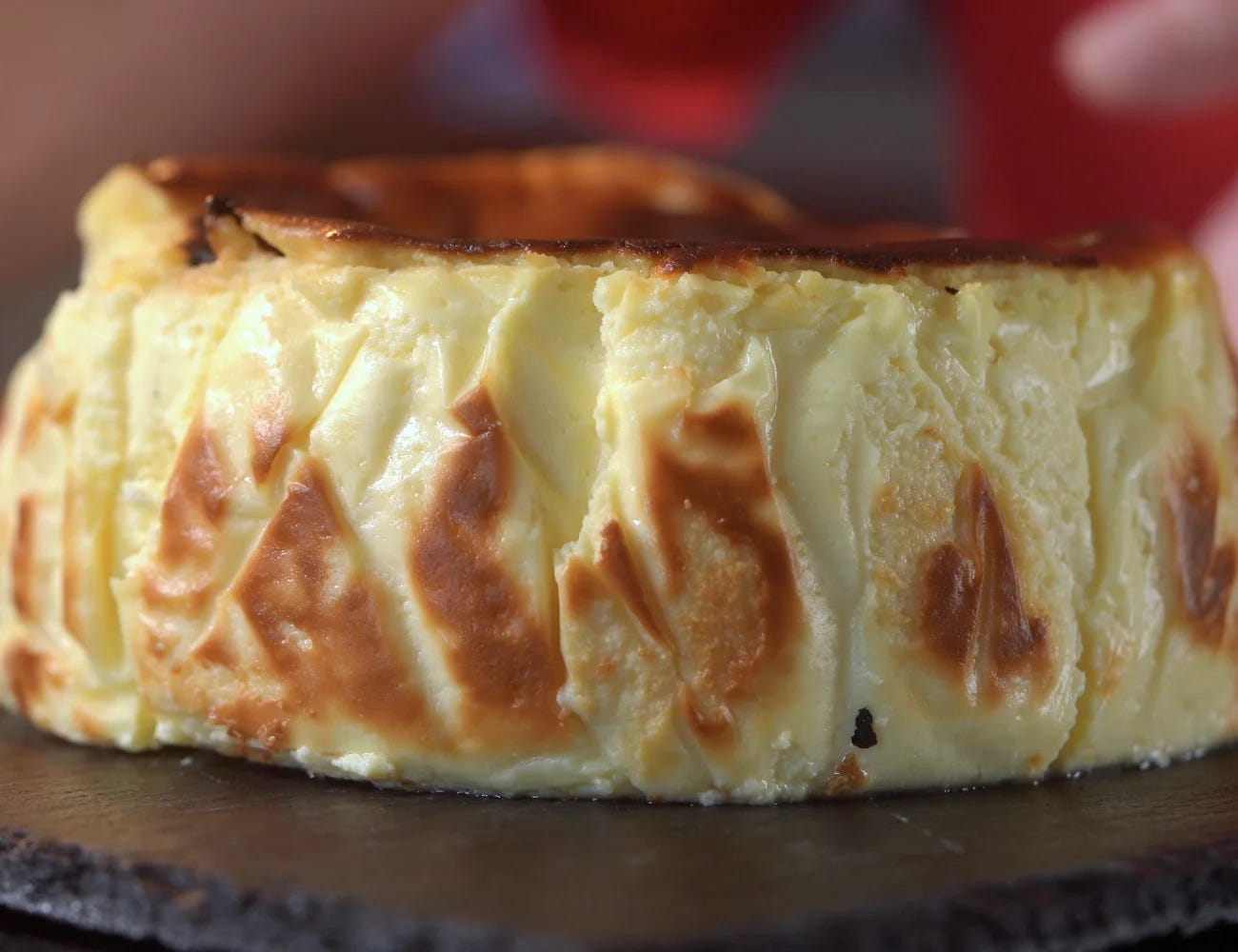
To slice: a warm, dry knife, wiped clean between cuts. The cross-section will show the full story — dark caramelized cap, clean golden edge, pale molten center that holds its shape just long enough to reach the plate.
Key tips at a glance
Use a digital scale for every ingredient — ratios are non-negotiable.
Cream cheese must be fully room temperature. Cold cream cheese leaves lumps that no amount of mixing will fix.
Always strain the batter before pouring. One minute, total difference.
The cookie sheet under the pan protects the base. Don’t skip it.
Overnight chilling is not a luxury — it’s when the texture actually forms.
Dark amber top = caramelized. Acrid smell = gone too far. Trust your nose.
Products To Use
Amazon Affiliate Links — help me afford to offer this content free to you!
👉 kitchen scale with precision weights — what you need for bread too!
👉 mesh sieves — interchangeable (space saving) stainless steel
👉 whisk I use — remember we want to mix by hand to avoid adding too much air into the custard!
👉 pure vanilla extract — hands down my favorite brand when I’m out of homemade!
👉 pure orange extract — same brand
This post contains affiliate links. Sweet Savory World may earn a small commission on qualifying purchases at no additional cost to you.


