

Stop Buying Vanilla Extract. Make It Instead — and Give It as a Gift.
The science of vanilla extraction and why what you were told about Grade B beans is probably wrong

Here’s a number that should change how you think about vanilla extract: a single bottle of pure vanilla extract easily costs between $8 and $25 at a US grocery store.
A batch of homemade extract — using quality vanilla beans and good alcohol — costs a fraction of that per bottle, tastes noticeably better, and takes about fifteen minutes of active work. The rest is time.
I came to this project out of necessity. Living and cooking in Italy, I found that quality vanilla extract was essentially unavailable.
It seems extracts containing alcohol are regulated as alcohol products, creating enough bureaucratic friction to keep most producers out of the market. What Italian groceries offer instead are whole vanilla beans, strange sugar-based infusions, and imitation vanilla products — powdered sugar blends that gesture vaguely in the direction of vanilla without actually being it.
So I started making my own. Then I started making it for friends and family. Then it became a holiday gift. What follows is everything the science actually says about how to do it correctly — because most recipes skip the parts that matter most.
Affiliate links follow and help me offer content and research free to you.
What You’ll Learn:
Why I recommend Grade A Madagascar Vanilla Beans for homemade extracts
Why use vodka, white rum or bourbon for extracting
What bottles to use and why
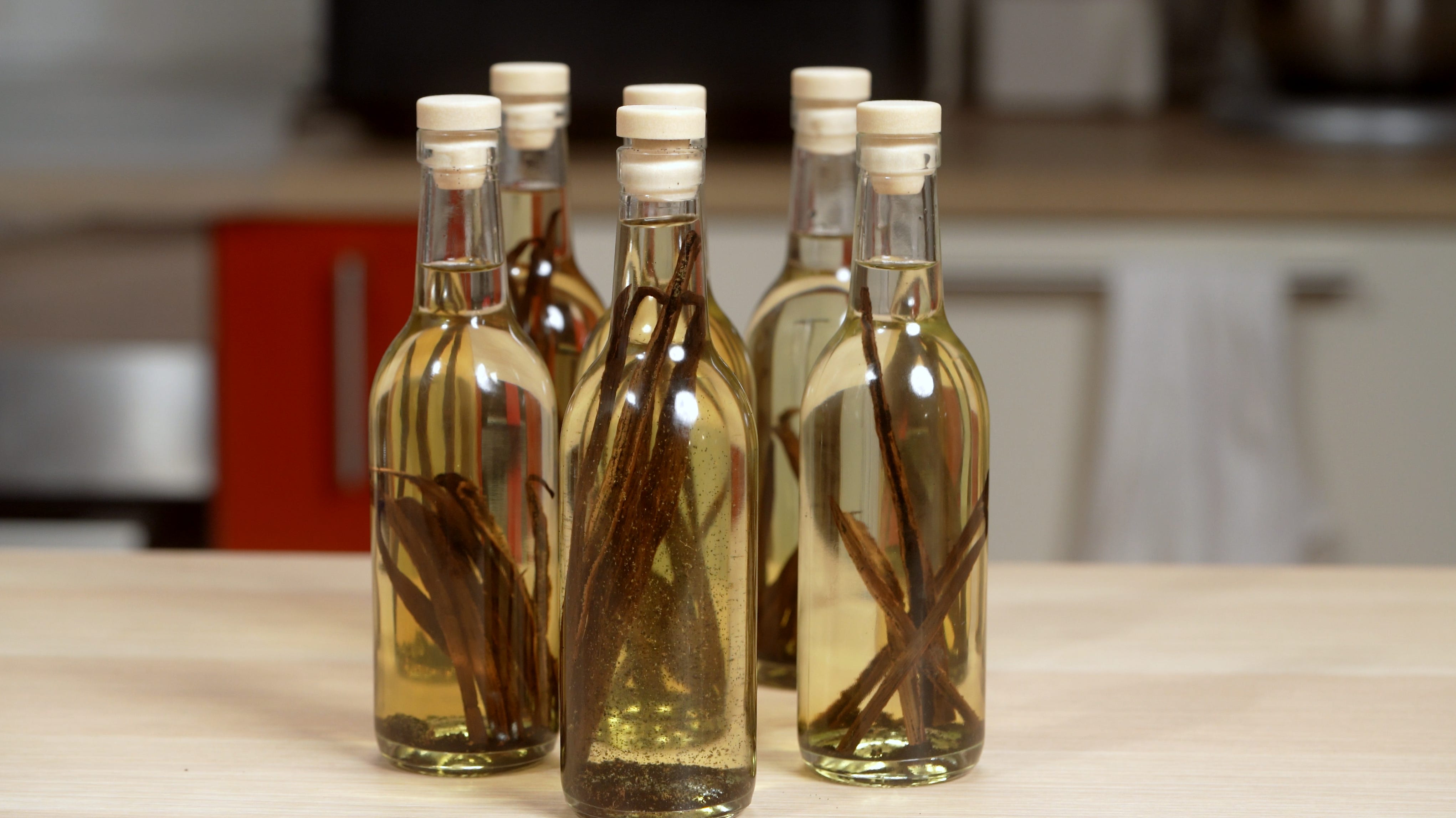
But first… Start Now for Winter Holiday Gifts!
Vanilla extract needs a minimum of 60 days of aging before it’s ready to use, and meaningfully improves for months beyond that.
60 days is the scientific minimum to develop the resinous, Bourbon character of a finished extract. If you plan to give these as winter holiday gifts, start now. Label each bottle with the date, store away from light, and by December you’ll have something worth giving!
Vanilla Extract Standards (FDA)
The standard for pure vanilla extract is defined in 21 CFR 169.175 and establishes two minimums:
Vanilla extract must contain ethyl alcohol at not less than 35% by volume
and 100g of vanilla beans per litre (13.35 ounces per gallon).
These are commercial labeling requirements. As a home producer you are not bound by them, but the ratios are scientifically grounded and serve as a useful baseline.
That means for a 250 ml bottle of extract made at home, you need approximately 24g of vanilla beans and alcohol within a specific concentration range — discussed below.
Which Alcohol to Use?
This is where most home recipes — and most guides — get it wrong. The FDA’s 35% minimum is a regulatory floor, but does not necessarily result in the ideal extraction.
The peer-reviewed research on this is specific. Jadhav et al. (2009), published in the Journal of Food Engineering, found that during conventional cold maceration, the ideal alcohol concentration for extracting vanillin is 35% and 50% (70 to 100 proof). Alcohol beyond 50% didn’t improve vanillin extraction and in fact was detrimental.
Best Alcohol to Use for Vanillin Extraction
vodka (for purity in flavor)
white rum
bourbon
Which Vanilla Beans? Origins and Flavor
Only two vanilla species are permitted in US food products under federal regulation: Vanilla planifolia and Vanilla tahitensis.
Madagascar Vanilla Beans
Vanilla planifolia — grown primarily in Madagascar, Indonesia, Mexico, India, Uganda, and Tonga — is the species behind the classic vanilla flavor.
Madagascar beans are considered the gold standard for baking and desserts. It has a high vanillin content and a rich, creamy, and buttery flavor with subtle chocolate or tobacco undertones.
Tahitian Vanilla Beans
Vanilla tahitensis, grown in Tahiti, Papua New Guinea, and parts of Indonesia, is a hybrid with a distinctly floral, fruity aromatic profile.
Often recommended for fruit tarts and sorbets, tahitian vanilla is described as floral, fruity, and perfume-like, with notes of black cherry, anise, and stone fruits like peach.
Tahitian beans contain lower vanillin but higher levels of aromatic esters. These esters are highly soluble in ethanol, so they will extract well at home.
Mexican Vanilla Beans
A note on Mexican vanilla: The FDA banned coumarin — a liver-toxic compound historically used to simulate vanilla character — from food products in 1954.
Poorly regulated commercial vanilla products from certain Mexican tourist-market suppliers have historically contained it. This applies to unregulated commercial extracts, not to properly sourced beans from reputable suppliers. That said beware because Mexico does not have the same strict labeling or safety laws regarding coumarin as the U.S., allowing these products to sometimes be mislabeled as “pure vanilla”.
The Vanilla Beans: Grade A or Grade B?
This is the question almost every vanilla extract guide answers incorrectly. The short answer, based on the scientific literature, is: Grade A.
This answer is based on a nuanced understanding about what we are looking for when we assess ‘quality’ in vanilla extract.
What does ‘quality’ vanilla extract mean?
Sensory and Taste Superiority: If “best quality” is defined by a “suave” and complex aroma, then high-moisture (Grade A/Gourmet, >30%) beans are superior.
Studies indicate these vanilla beans have a more developed aromatic profile.
Economic/Yield Efficiency: If “best” is defined simply by the amount of vanillin extracted per dollar or per gram of bean, Grade B (15–25% moisture) is preferred.
Because you aren’t paying for water weight, Grade B offers a higher concentration of the vanillin compound relative to its mass, making it the “workhorse” for commercial extracts.
Although vanilla extract contains more than 300 flavor compounds (Toth et al., 2011), vanillin is the most abundant and most commonly used as the prime indicator of flavor quality…
…However, vanillin alone is probably responsible for no more than 25% of the character of a quality vanilla extract. Gillette & Hoffman (2000) note that flavor notes such as pruney, woody, floral, fruity, and rummy, which develop alongside vanillin during curing, are even more important than vanillin character alone — and in some cases, extracts with high amounts of vanillin will not taste as good as other extracts with lower vanillin content but containing the other flavor components.
Moisture content makes the difference. The moisture content of commercial vanilla beans varies from 10% for poor quality lower-grade beans to 35% for gourmet beans (Ranadive, 2011).
Drier beans (think Grade B) are less aromatic than high moisture beans. Flavor notes such as pruney, woody, floral, fruity, and rummy, which develop alongside vanillin during curing, do not develop and/or are lost in over-dried, low-moisture beans (Gillette & Hoffman, 2000).
That means that if vanilla flavor is what you care about, the beans with higher moisture content will deliver the most complex flavor and more flavor compounds (not just vanillin).
Bottom Line: Grade A for a more flavorful extract!
Grade B beans — labeled “extraction grade” — have 20–25% (less) moisture, are drier and more ‘vanillin’ can be extracted but vanillin is only one compound that makes a vanilla extract taste great!
Grade A beans — 25–35% (more) moisture — include the full spectrum of aromatic compounds that develop during curing. If flavor quality is the goal, the scientific literature supports using Grade A vanilla beans in your extract.
→ Quality Grade A Madagascar Vanilla Beans (affiliate link)
Particle Size: Why It Matters
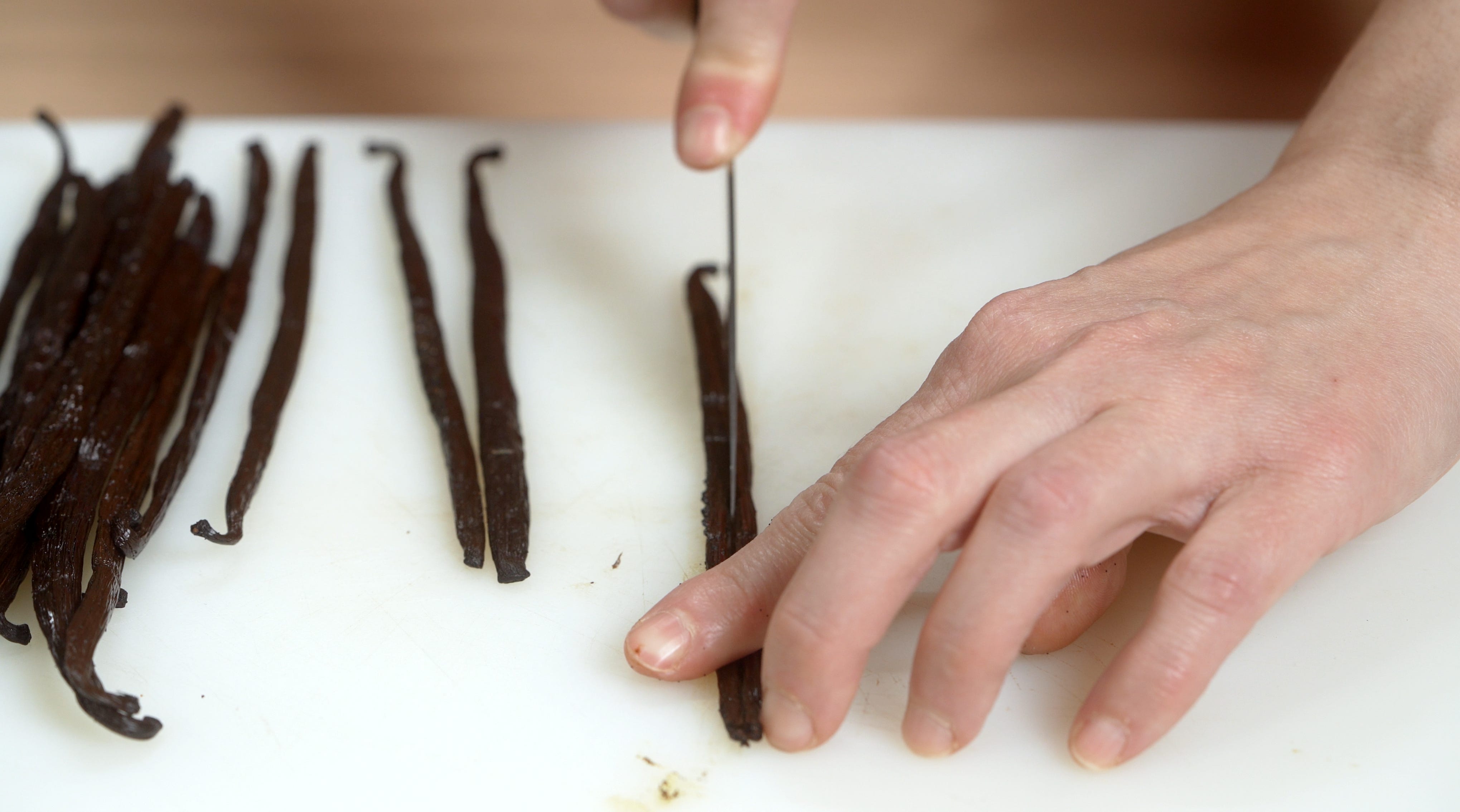
Dong et al. (2013), published in Food Chemistry, compared three different bean particle sizes in the production of vanilla extract: 2mm chopped beans, 5mm chopped beans, and powdered beans.
Smaller particles = Better Extraction: Vanillin yield increased with decreasing particle size — powdered beans produced higher yields than chopped beans at either size.
Agitation = Better Extraction: The researchers also found that agitating the container of ground beans improved extraction efficiency.
Applying this research at home!
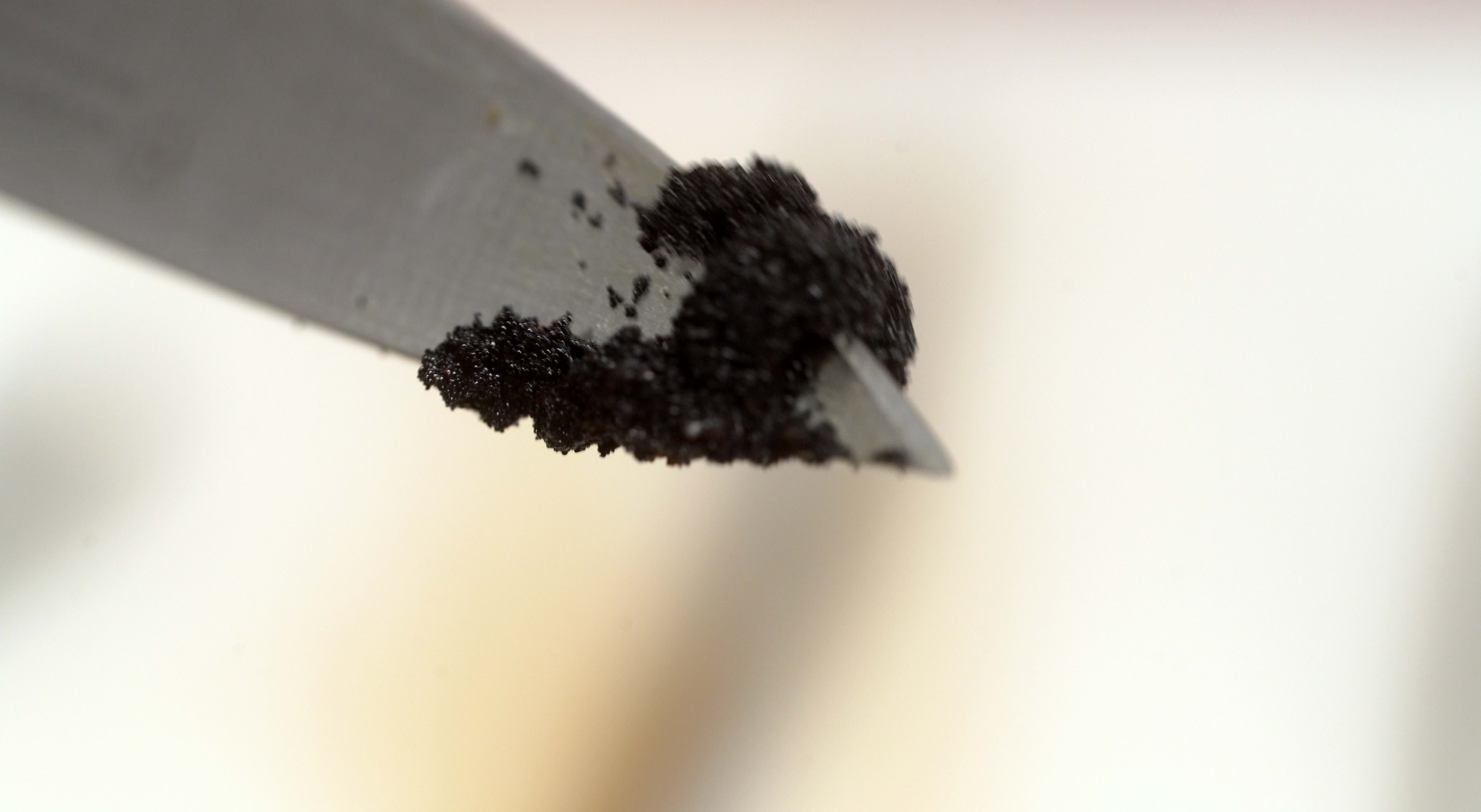
Split and Scrape the Beans: It’s best to split the beans, scrape out the seeds and add the seeds and pods to the bottle for extraction.
✨ Ingredients ✨
✅ Grade A Vanilla Beans / vanilla pods: 3-7 for every 250 ml of alcohol
For a 250 ml bottle of extract made at home, you need approximately 24g of vanilla beans according to the FDA
✅ bourbon, vodka or white rum: 250 ml for every 3-7 vanilla beans
✅ glass bottles (preferably dark or green to prevent sunlight);
See suggested products below.
Using dark or green UV-protected glass is essential because light exposure degrades the delicate volatile compounds like vanillin resulting in a less flavorful vanilla extract!
Products To Use
Amazon Affiliate Links
👉 Vanilla Beans — Grade A Madagascar
👉 Amber Glass Bottles with Lids — to extract in the final gift bottle
👉 Large Dark Glass Bottles — to extract in a large bottle and fill the gift bottles later. You’ll also want small funnels in this case for filling the gift bottles.
Method
Split each bean lengthwise from tip to tip, exposing the seeds. Use a sharp knife to do this.
Place the seeds and split pods/beans in dark glass bottles.
Pour the alcohol over the beans, ensuring full submersion. Seal tightly.
Store at 16–18°C, away from light. Shake or invert the bottle once or twice a week for the first month, then weekly thereafter.
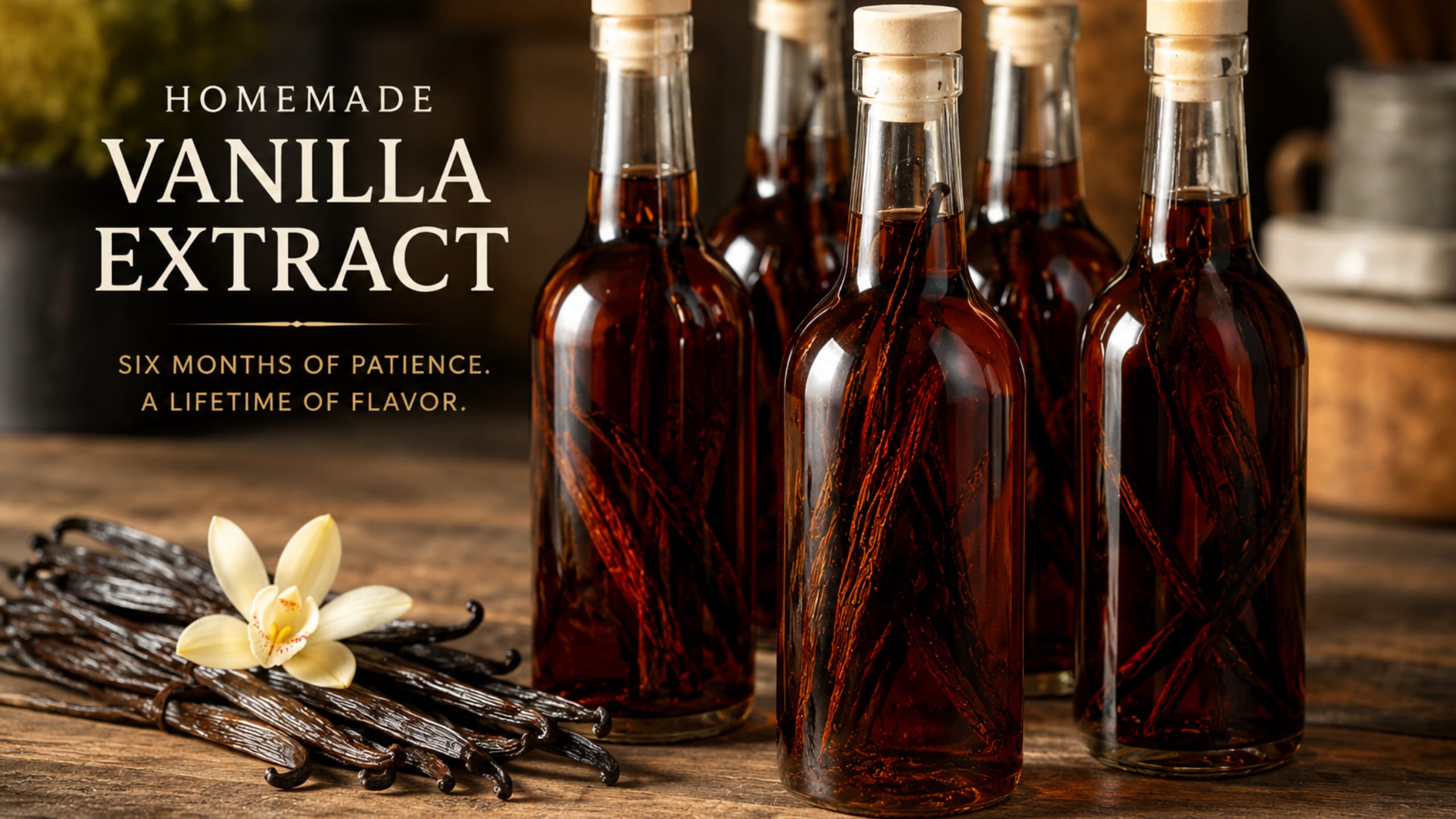
Minimum infusion: 6 months for a full-flavored extract at this scale and particle size. Do not rush it. The extract will deepen from pale amber to a rich mahogany — color is a reliable visual indicator of progress.
The beans can remain in the bottle indefinitely. As you use the extract, top up with fresh alcohol to sustain the extraction.
This post contains affiliate links. Sweet Savory World may earn a small commission on qualifying purchases at no additional cost to you.
Aging and Storage
Freshly made vanilla extract has a slightly harsh alcohol bite. Keep bottles away from heat sources — above the stove is the worst possible location — and out of direct light. Dark glass is not decorative; UV exposure degrades vanillin over time so we want to avoid that.
Gifting Notes
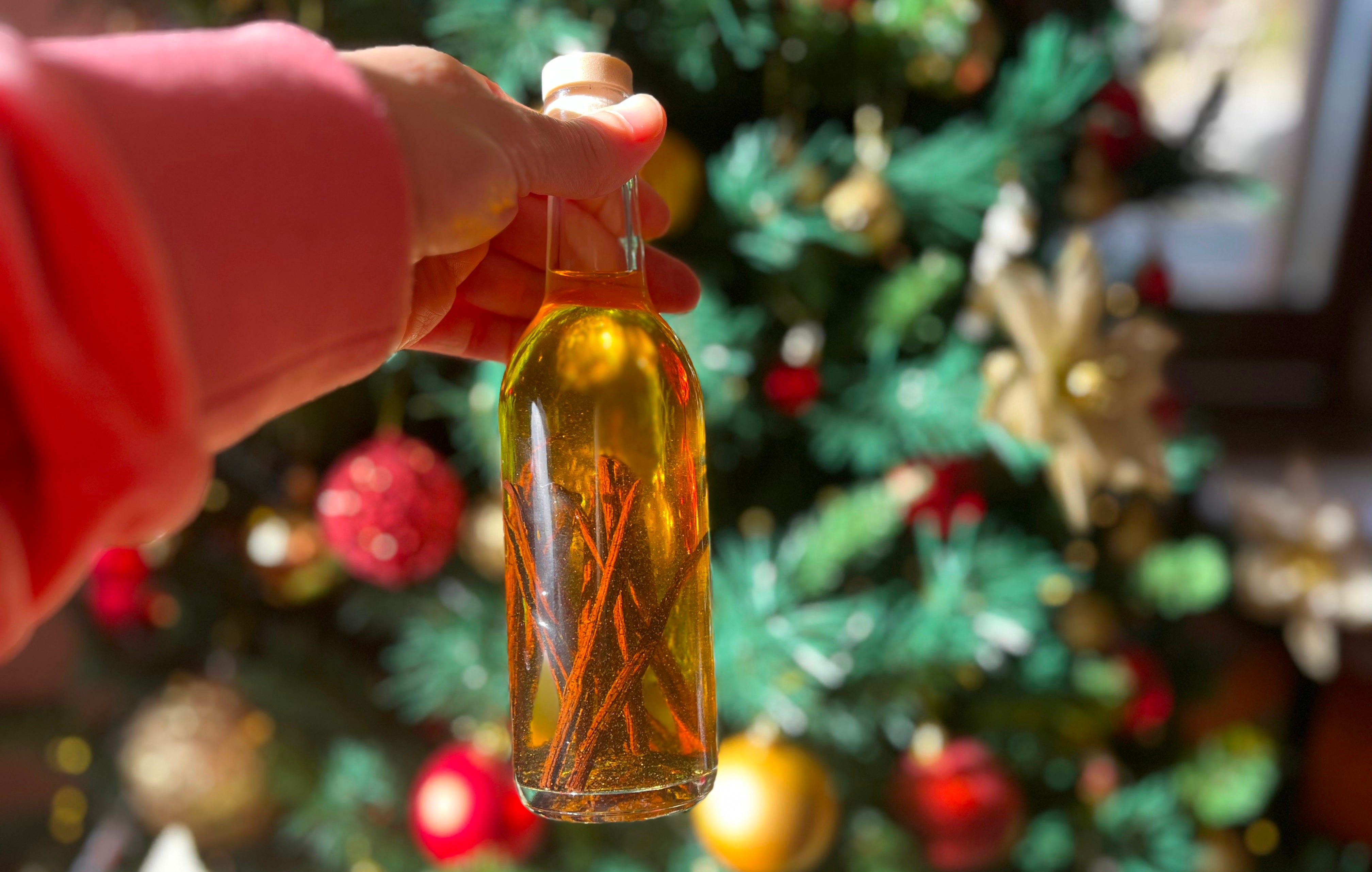
Label each bottle with the start date and earliest ready date. A small card noting the bean origin makes the gift feel considered. These are best given at six months minimum — longer if you have the patience!
Start now. Give them in December. They will be ready and look beautiful!
Scientific references:
Gillette, M., and Hoffman, P. (2000). Vanilla extract. In Encyclopedia of Food Science and Technology, 2nd ed. John Wiley & Sons.
Jadhav, D., et al. (2009). Extraction of vanillin from vanilla pods: A comparison study. Journal of Food Engineering, 93, 421–426.
Rajaonarivony et al. (2012). Comparative analysis of volatiles in Bourbon and Ugandan vanilla bean extracts. PubMed, PMID 23020223.
Ranadive, A.S. (2011). Quality Control of Vanilla Beans and Extracts. In Handbook of Vanilla Science and Technology. Blackwell Publishing.
Toth, S., et al. (2011). Volatile Compounds in Vanilla. In Handbook of Vanilla Science and Technology. Blackwell Publishing.
Dong, Z., et al. (2014). Comparison of four extraction techniques of vanillin from Vanilla planifolia. Food Chemistry, 149, 54–61.
21 CFR 169.175, US FDA Code of Federal Regulations.
TTB Scientific Services Division, Vanilla Extracts and Vanilla Flavors guidance.
Excellent article. The problem I have is finding the pods! Where I live, small coastal town, S Africa. Some years ago, I bought from a small spice shop, which closed down. I loathe using commercial essence.